

TRIXIM® – Cefixime BP
COMPOSITION
Available in two dosage forms:
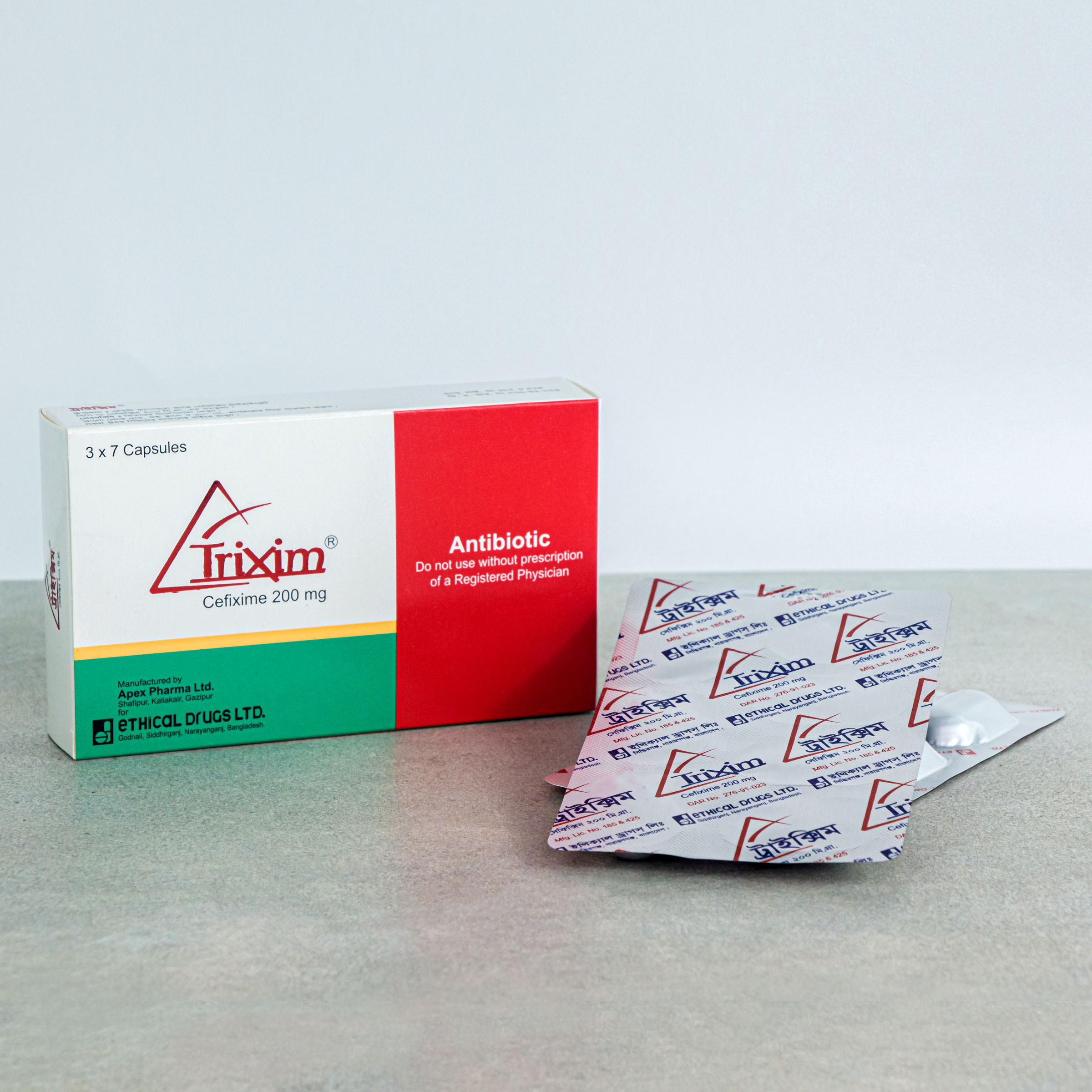
TRIXIM®200 Capsule: Each capsule contains Cefixime Trihydrate BP equivalent to Cefixime 200 mg.
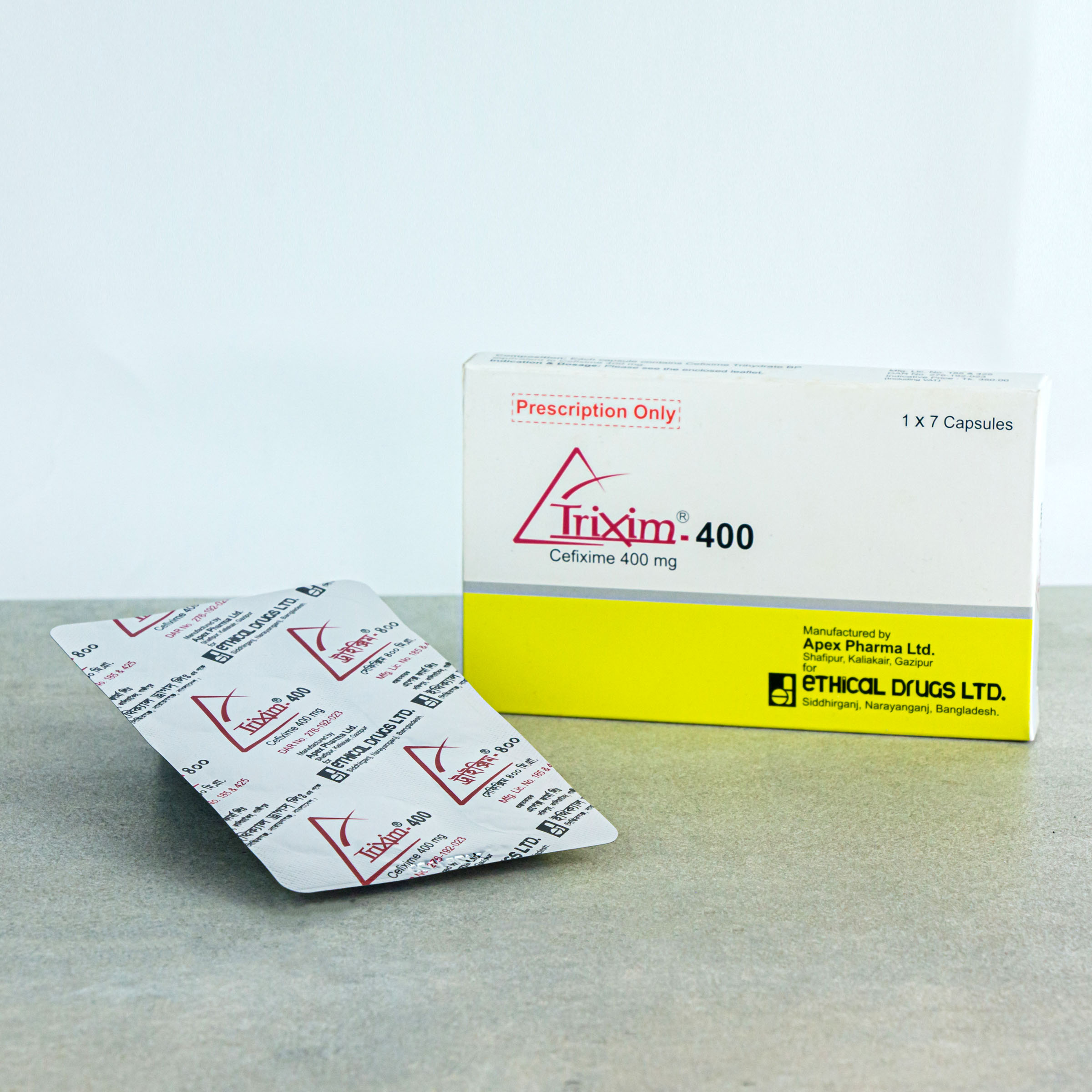
TRIXIM®400 Capsule: Each capsule contains Cefixime Trihydrate BP equivalent to Cefixime 400 mg.
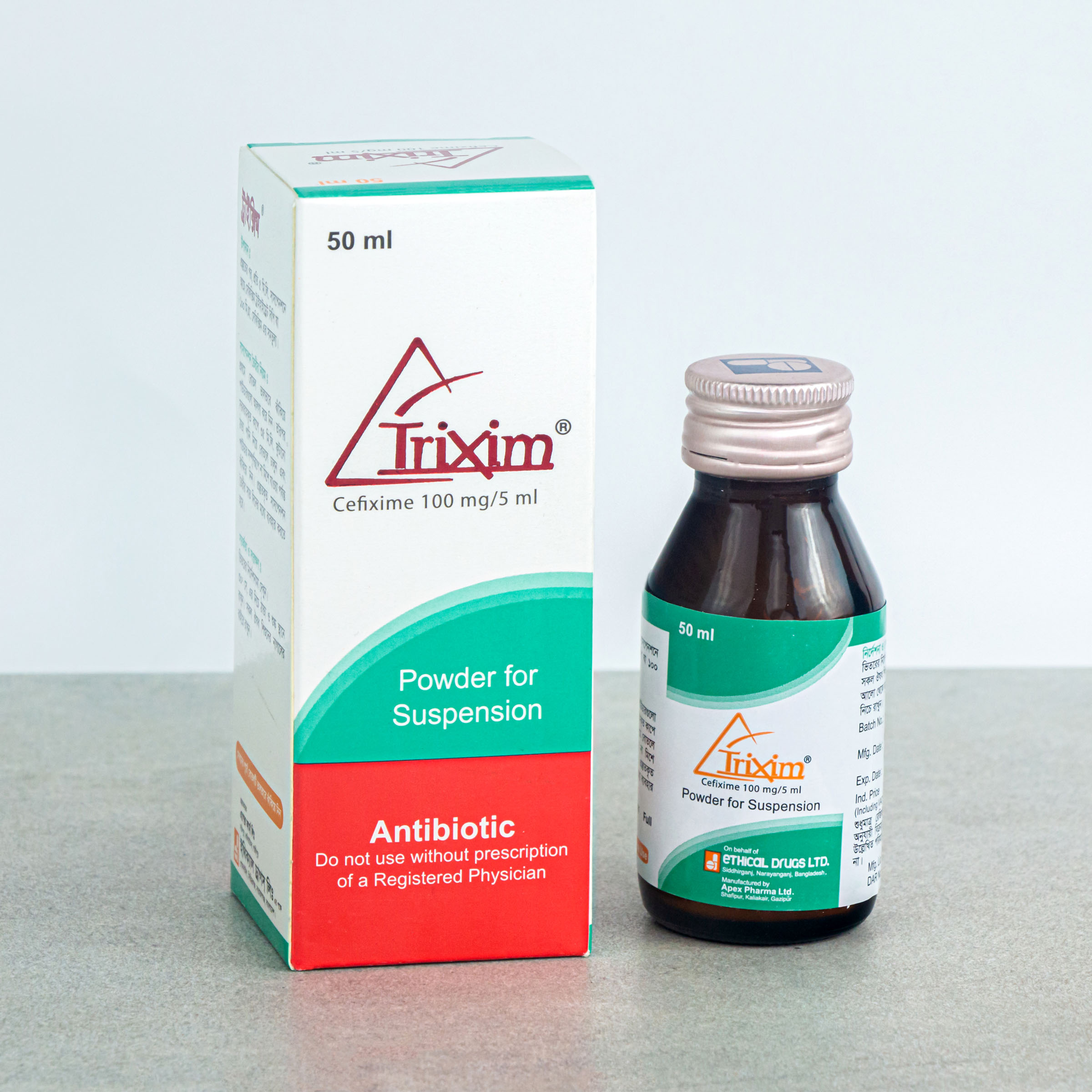
TRIXIM® Powder for Suspension: After reconstitution, each 5 ml suspension contains Cefixime Trihydrate BP equivalent to Cefixime 100 mg
MODE OF ACTION
Cefixime is a semi-synthetic, broad spectrum cephalosporin antibiotic of third generation for oral administration. It is a bactericidal antibiotic, kills bacteria by interfering in the synthesis of the bacterial cell wall. Cefixime is highly stable in the presence of beta-lactamase enzymes. Cefixime has marked in-vitro bactericidal activity against a wide variety of Gram-positive and Gram-negative organisms including beta lactamase producers. Clinical efficacy of Cefixime has been demonstrated in infections caused by commonly occurring pathogens including Gram-positive organism Streptococcus pneumoniae, Streptococcus pyogenes and Gram-negative organism Escherichia coli, Proteus mirabilis, Klebsiella spp., Haemophilus influenzae (beta-lactamase positive and negative), Moraxella catarrhalis (beta-lactamase positive and negative), Salmonella typhi and Enterobacter species.
INDICATIONS
Trixim is indicated in the following infectious diseases-Respiratory Tract Infections: Pneumonia, Sinusitis, Pharyngitis, Tonsillitis, Acute Bronchitis and Acute Exacerba¬tions of Chronic Bronchitis (AECB). Also indicated to Otitis Media, Typhoid, Urinary Tract Infections, Uncomplicated gonorrhea (cervical/urethral) etc.
DOSAGE AND ADMINISTRATION
Trixim® Capsule: Adult and child over 12 years: 200 or 400 mg daily as a single dose or in two divided doses. Trixim® Suspension: Child over 6 months: 8mg/kg daily as a single or in 2 divided doses. The usual treatment of Trixim® is 7 days. This may be continued for up to 14 days according to the severity of infection.
SIDE EFFECT
Cefixime is generally well tolerated. The majority of adverse reactions observed in clinical trials are mild and self- limiting in nature. Gastro-intestinal disturbance: Diarrhea (if severe diarrhea occurs, Cefixime should be discontinued), changes in the color of stool, nausea, abdominal pain, dyspepsia, vomiting, flatulence have been reported. CNS disturbances: Headache, dizziness.
Others: Hypersensitivity reactions which usually subsided upon discontinuation of therapy; infrequent and reversible hematological changes; elevation of serum amylase.
PRECAUTION
Cefixime should be prescribed with caution in individuals with a history of gastrointestinal diseases, particularly colitis. Dosage adjustment is only necessary in severe renal failure (creatinine clearance < 20 ml/min).
CONTRAINDICATION
Patients with known hypersensitivity to Cefixime or cephalosporin group of drugs.
DRUG INTERACTIONS
Carbamazepine: Elevated carbamazepine levels have been reported in post marketing experience when Cefixime is administered concomitantly. Drug monitoring may be of assistance in detecting alterations in carbamazepine plasma concentrations.
Warfarin and Anticoagulants: Increased prothrombin time, with or without clinical bleeding, has been reported when cefixime is administered concomitantly.
USE IN PREGNANCY & LACTATION
Pregnancy: Pregnancy category B. There are no adequate and well-controlled studies in pregnant women. Because animal reproduction studies are not always predictive of human response, this drug should be used during pregnancy only if clearly needed.
Lactation: It is not known whether Cefixime is excreted in human milk. Consideration should be given to discontinuing nursing temporarily during treatment with this drug.
OVERDOSE
Gastric lavage may be indicated; otherwise, no specific antidote exists. Cefixime is not removed in significant quantities from the circulation by hemodialysis or peritoneal dialysis. Adverse reactions in small numbers of healthy adult volunteers receiving single doses up to 2 g of Cefixime did not differ from the profile seen in patients treated at the recommended doses.
STORAGE
Store in a cool and dry place, protect from light. Keep out of the reach of children.
PACKAGING
Trixim® 200 Capsule: Box containing 3 x 7’s Capsule in Alu-Alu blister.
Trixim® 400 Capsule: Box containing 1 x 7’s Capsule in Alu-Alu blister.
Trixim® Powder for Suspension: Bottle containing powder for the preparation of 50 ml Suspension.